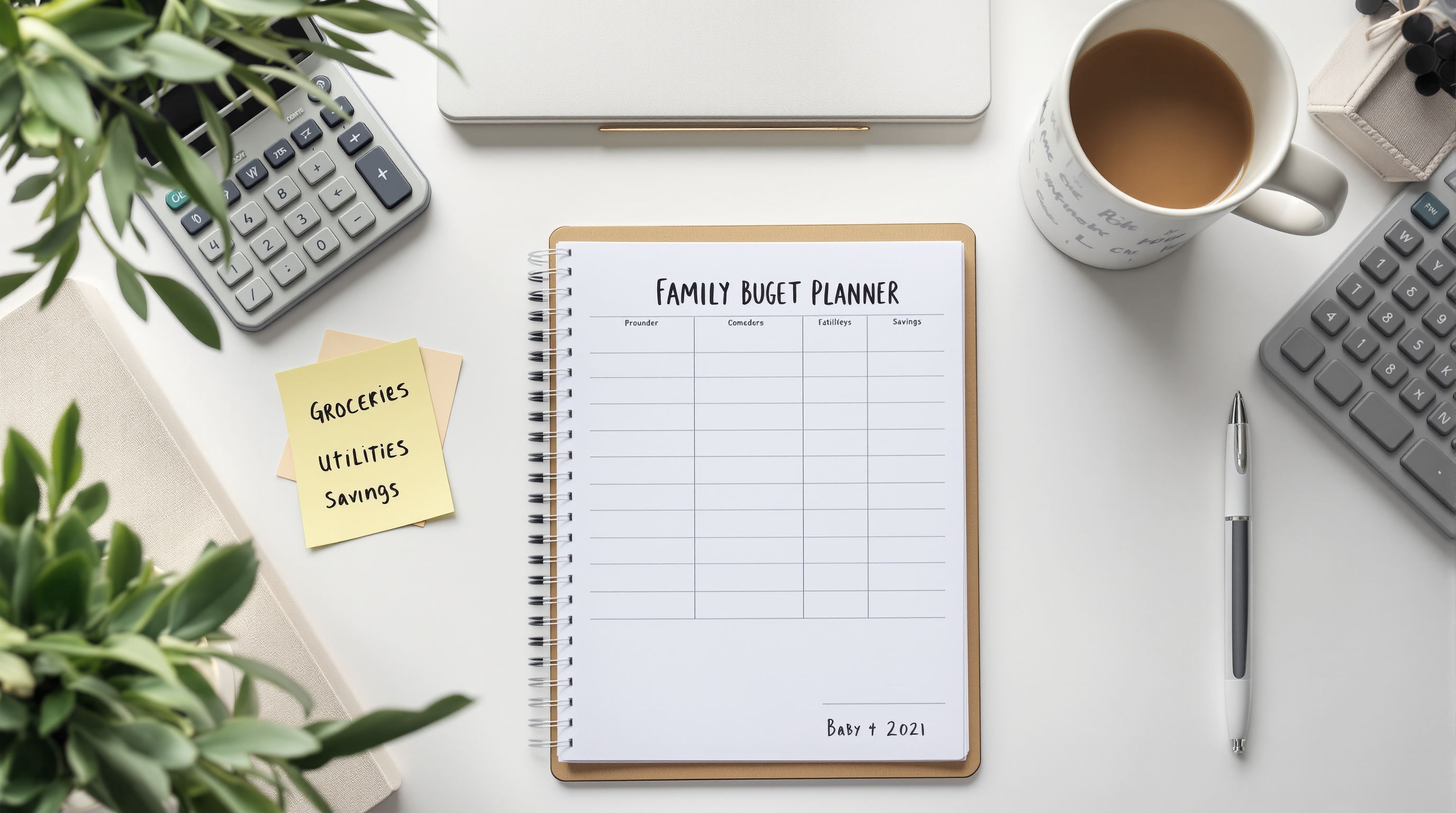
A family budget is the foundation of every good financial plan. Without one, it's nearly impossible to know where your money is going, let alone make intentional decisions about saving or spending. This guide walks you through building a household budget from scratch — a process that takes a few hours upfront and pays dividends for years.
Step 1: Know Your Real Monthly Income
Start with your total take-home pay — the amount that actually lands in your bank account after taxes, health insurance, and retirement contributions are deducted. If your income varies month to month (freelance work, hourly wages with variable hours), use the average of your last three months. Always budget conservatively: use your lower-income months as your baseline.
Include all sources: primary job(s), side income, child support, rental income, and any other regular deposits. Write the total at the top of your budget.
Step 2: List Every Fixed Expense
Fixed expenses are the same every month: mortgage or rent, car payment, insurance premiums, loan minimums. List them all with their exact amounts. These are non-negotiable in the short term — they come out of your budget first.
Total up your fixed expenses and subtract from your monthly income. The remainder is what you have to work with for everything else.
Step 3: Estimate Variable Expenses
Variable expenses change from month to month: groceries, gas, utilities, dining out, clothing, kids' activities. For each category:
- Review your bank and credit card statements from the past 3 months
- Calculate the average you've been spending
- Decide if that average is reasonable or if it needs to be reduced
Common variable categories for families: groceries, household supplies, utilities, transportation/gas, dining out, entertainment, clothing, kids' activities, medical copays, personal care, and gifts.
Step 4: Try Zero-Based Budgeting
Zero-based budgeting means giving every dollar a "job" so that income minus expenses equals zero. This doesn't mean spending every dollar — some dollars get assigned to savings goals. The point is intentionality: every dollar has a predetermined destination before the month begins.
The zero-based budgeting approach is particularly effective for families because it forces you to have the savings conversation upfront, before discretionary spending happens.
Step 5: Build In a Buffer
Every family faces irregular expenses that can derail a budget: car repairs, medical bills, school field trips, birthday gifts. Build a "buffer" category of $100–$300 per month that accumulates in a separate savings account. This becomes your family's first emergency fund, preventing unexpected costs from going on a credit card.
Step 6: Automate What You Can
Set up automatic transfers for savings on payday. Pay yourself first — move the savings before you have a chance to spend it. Schedule bill payments to avoid late fees. Automation removes willpower from the equation and makes good financial habits effortless.
Step 7: Review Monthly
A budget is a living document, not a one-time exercise. Schedule a 30-minute budget review at the end of each month. Ask: Did we stick to each category? What overspent? What came in under? Adjust next month's budget based on what you learned.
For more on reducing variable expenses, see our guides on frugal grocery shopping and meal planning on a budget.
Budget for the Irregular, Not Just the Monthly
Most budgets fail on timing rather than arithmetic. Car registration, insurance premiums paid twice a year, school fees and dental work are all predictable, yet they rarely appear in a monthly plan — so a credit card absorbs them instead. The fix is a sinking fund: total each irregular cost for the year, divide by twelve, and make that a fixed monthly line. A household with $3,600 of annual irregular costs needs $300 a month set aside, and finding that in advance is far easier than finding $900 the week a premium falls due.
Adult health costs deserve the same approach — look up your plan's deductible and out-of-pocket maximum once a year and give their predictable share a line of its own.
Tools to Help
You don't need expensive software. A simple spreadsheet works well. Free options include Google Sheets (which has budget templates), the YNAB (You Need A Budget) app, or even pen and paper with envelope-style cash budgeting. The best tool is whichever one you'll actually use consistently.
Ready to tackle debt next? See our family debt payoff strategies guide.